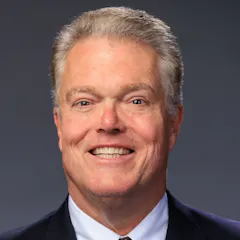
Aaron Ross Powell: Welcome to the Liberalism.org Show. I'm Aaron Ross Powell, senior director of liberal projects at the Institute for Humane Studies, and I'm joined today by Michael Munger. He's a political scientist and the Pfizer Pratt University professor at Duke. He's also a Liberalism.org fellow. Thank you for joining us, Mike.
Michael Munger: It's a pleasure.
Aaron Ross Powell: In the essay you published on Liberalism.org that we are discussing today, um, you start by accusing both sides of policy debates of going negative by comparing their idealized version of their system to the messy real world of their pro-opponents and effectively just arguing against their opponent's position while assuming... What does that look like in practice?
Michael Munger: I started to bridle when you said both sides, but in fact, that's accurate because I, I did treat it as being both sides. Um, I think it's true for all sides. So when someone advocates for a position, their opponents generally say, "Well, there's some problems w-with that position that keep it from being perfect. Since it's not perfect, we should use my system." Now, when I say it that way, the problems with that are obvious. But when you take that template and, and then, then apply it to the arguments that people actually make, it actually fits uncomfortably closely. And one of the times when I first started noticing this was that many of my colleagues who are, um, libertarians or classical liberals would say things like, "You know, we don't really need the Food and Drug Administration." Or they would ask a, uh, hypothetical question: "Suppose there were no Food and Drug Administration. Would there just be chaos?" And no, there would be reputation and brand name. Uh, we don't need to have licensing for pilots because airline pilots-- uh, airlines would compete based on safety, and after a few horrific accidents, then, uh, the bad airlines would be selected out by competition. Well, uh, all that's true, but that's pretty costly. That, that system has some costs in it, and people are unwilling to, uh, accept those costs. The result is that it-- there tend to be, in a liberal society... Now, in other societies, there may be other-- they're authoritarian, religious. But in a liberal society, there's two basic ways that we decide things. One is through politics by voting, and the other is through markets and using prices and income to decide how we'll allocate resources. Both of those two systems suck. They're bad. I have proposed what I call the pretty pig problem, which is that, and it's modeled after a story that, uh, Gordon Tullock told, but that was about a, uh, Roman emperor and two minstrels who were going to sing. And I'm a redneck from the South, so I'm much more comfortable talking about a, uh, a, a pig contest at an agricultural fair like the North Carolina State Fair. So somebody... Uh, we're, we're, we're at the pretty pig contest. There's only two contestants because everybody knows pigs aren't very pretty, but still there are two contestants. We bring the first one out. It's drooling. It's muddy. All-- It's all covered with hay, and you look at that and you say, "That's-- There's no way. Let's just give the prize to the second pig." Well, that's true for both markets and for politics if that's all you look at. But in a liberal society, there's two problems that we face. One is we have to make choices together. There are things we have to do together, things we have to decide collectively. And deciding to decide using politics or deciding to decide using markets itself requires a decision process. So markets are not what happens when the state does nothing. Markets are what happen when we have come up with a set of rules and we're able to enforce those rules. So even those of us on the market side are not anarchists in the sense that we think there should be no rules. We want a process for deciding what the rules are. And so I, I think both in fairness to the weaknesses of our own position and the strengths of our opponent's position, we'll be more persuasive if we begin with the premise that let's be comparativists. Let's look at how these different systems work in different circumstances.
Aaron Ross Powell: You can see, though, the, the pull against doing this, um, rhetorically, and we see it all the time in arguments online. You see it with, um, exuberant young people staking out political positions, um, in college. I know I certainly did this when I was an undergrad, that there's a, there's a real desire to not admit the warts of our side or to not think through them, because to do so is... I, I, I mean, it, it invites critique. It invites, um, refutation. Um, so isn't there-- I mean, isn't there that risk? Like, if we really care about markets, we really care about liberty, we really care about individual rights, and there's always someone out there who's looking to scale these things back, to restrict them, to introduce more of state coercion, whatever it happens to be, isn't there a risk in kind of stating the problems with our own side that, you know, maybe we lose or maybe we weaken our argument when others are, are hearing it?
Michael Munger: I think there is power to that argument, and I would agree with it if we're winning. We're losing. We're losing hard, and we're losing constantly. So those of us who think that markets, for all their warts and problems, are a-- should be the, the presumption. So the, the presumption should be what Adam Smith called the system of natural liberty. And he thought that all that was necessary, for the most part, was the state to pull back its restrictions and the system of natural liberty would establish itself naturally, and it would be emergent. That's a pretty hard thing to explain to people who think, well, there's a problem, so we should do something. And so that's the, the difficulty is that we face a presumption that if there's a problem, we should do something. And people... Some people have called this solutionism. So the, the mistake is that if there's a problem, then, uh, we, meaning the state, should take some kind of action. And so the-- I'm-- I live in political economy world, and in political economy world, there is a standard way of approaching problems. And so what we see is all the problems in the world basically are the result of what political economists have called market failures. There's five big market failures, and the, the... it's easy to find these, the, the five market failures that are listed in, in many places. Um, each of them requires some sort of state or government response. And so it is actually created, I have come to realize, di-di-dirigistes have a mechanism by which they say, "Well, here's a market failure and here's the correct state response." What we need to do is to point out that, yes, it's true that there is a problem with the market. The question is, will the state response actually be an improvement? And so the two mistakes that we've made is I think many people have tried to defend the perfection of markets, and then it ends up being an empirical question, is, are markets really perfect or is there potentially a problem with asymmetric information where it's possible to defraud people? If I'm a used car dealer, can I defraud people? Is it possible for me to, uh, actually obtain all of the things that I need to provide public goods? Am I able to charge prices for those things? Well, maybe I could if, if there were some other kind of solution. We have been played for chumps by defending the perfection of markets rather than discussing the imperfection of the state. And so, uh, the... if we once grant the imperfection of markets, but then say, "You, dirigiste statist, you need to tell me why your solution is going to be better," I think we can win that fight. So the... what I want to do is grant market failure rather than argue about market failure. Markets really do fail. The problem is that states, in many cases, not only don't improve the situation, they make it worse. That's the thing that I don't see being taught to undergraduates, and I don't see it being part of the debate. And frankly, when I said we're losing, I don't see young conservatives believing this. So the y-young conservatives used to have... They would be dressed in a coat and tie, and they'd have their Cato constitution, their little, uh, dark red Cato constitution. Now they say, "Pfft, constitution, I don't care a thing about that. What I really want is to be able to have enough power to use the state to do good."
Aaron Ross Powell: So that then brings up the presumption that, that you mentioned, because as you were saying that, it seemed like someone, either a, we'll call them an illiberal on the left or an illiberal on the right of the kind you just described, um, could respond to everything you just said and say, "Look, like, I agree with you that we should start with the presumption, and we should then, if someone wants to push back on that, they need to have a good argument, and we should get into the details of what works and what doesn't." But you've just... You, Mike Munger, have gotten the presumption backwards. And in fact, the presumption is state power, and you've admitted that markets have problems, and so now you have to defend why we should ever turn anything over to markets instead of just the raw exercise of power, whether that's in the, you know, the cause of the common good or it's for the people or it's for whatever privileged group. You know, pick your kind of political ideology and how they want to wield state power. But why do we-- what makes the presumption of liberalism, liberty, markets, et cetera, the one that we should place the weight on versus the presumption of power?
Michael Munger: That is a good question, and the... one of the reasons that I want that to become the question is I think that's one we can easily win. So the, the... I just did an 11-part podcast. I would never have started it if I had known it was going to take so long. It... I think it's 17 hours overall, um, going through the Scottish Enlightenment, the origins of The Wealth of Nations, and then 10, uh, more on Wealth of Nations and The Theory of Moral Sentiments by Adam Smith, and he makes the case for the presumption in favor of liberty. And so that case has been made. It is possible to describe it. I think the simplest version of it is that Smith is arguing for a system of increased opulence, which really just means shared wealth. So it is possible for you to become wealthier and for me to become wealthier. States are different. States are about power. It is not possible for me to become more powerful and you to become more powerful. So the... If, if we exchange, we're both better off. If one of us is striving for control, only one of us can get it, and that's the, that's the, the simple argument for the presumption, is that when you're... It, it matters. Rules matter more than they should. I, I come from a part of political science called public choice, and the, the basic summary I think of public choice is or should be, rules matter more than they should. The game that we're playing, that we're participating in determines our actions. And so people are not good or bad. The rules make them so. And so if you have a rule that says we can all cooperate and we can all get better off, that's a much better rule than whoever wins, wins forever, and they get to wield power. That's a really destructive system. And in fact, liberalism grew up in opposition to that. Liberalism is a really frustrating ideology, and I, I hear this every generation. I'm really old. I hear that every generation from new generations of young people because liberalism basically says we have to be both humble and tolerant. We cannot hope to have absolute control. And they say, "But we could do so much good if we could have absolute control." Even if you win, you have to think that you'll win forever. Otherwise, you're creating a large shar-sharp sword that soon, right after the next election, will be wielded by your worst enemy. And so the argument for limiting the government, I admit, is really frustrating. But it means that that large, sharp sword that you've created will not be wielded against you by your worst enemy right after the next election. And so that's the argument that we're losing, and that's what young people want. They want to take that sword and smite evil.
Aaron Ross Powell: You use as an example of thinking through how to approach policy from within this framework, you use roads. And, and I was hoping you could talk us through that because it's, it's interesting, and for anyone who's hung out in libertarian or market liberal circles, the who will build the roads question is kind of the knockdown offered against these views.
Michael Munger: Smugly.
Aaron Ross Powell: Smugly. Always, yes. But you point out in a really interesting way, it's actually, like, much more nuanced and complicated than it might seem.
Michael Munger: Roads are actually used against us in two ways. You mentioned one, and that is who will build the roads? Um, the other is, well, you use the roads, don't you? So the, the, the-- obviously, you say you would like to be left alone and be a libertarian, but you use the roads, don't you? And so you're just being a hypocrite. Um, I, at my most provocative, have tried to say, well, the, the slave eats the meal provided by the slave owner, but that doesn't mean that he is-- the slave is endorsing slavery. You don't actually have much of a choice. But at my less provocative, where I'm not just trying to insult the people I'm talking to rather to persuade them, I think roads is actually the perfect example because usually the argument-- One, one of the market failures that I mentioned before are called public goods, and Adam Smith actually mentions this quite explicitly in book five of The Wealth of Nations. Um, his description of public goods is very useful things that would benefit society that will not be provided in the correct amount if just left up to commerce. And so, um, this problem was solved technically by Paul Samuelson in his paper, The Pure Theory of Public Goods, in which he argued that we should think of public goods as being non-excludable. That is, I can't prevent someone from enjoying it if it's provided at all, and non-rival, in the sense that if it's provided, your consumption of it doesn't reduce the amount available to me. If those two things are true, I can't really charge for it, and, uh, using some of it doesn't reduce the amount available to everyone else. Markets can't possibly provide this function, and if we want it, then we should have the state do it. Now, there's some problems with that because Samuelson imagines that the state is run by an omniscient, beneficent dictator who will choose the correct amount and will charge, uh, taxes that allow us just to be able to provide the correct amount of the public good. But let's suppose that all of that even is true. Roads are not public goods. Roads are not r-non-rival because they're subject to congestion. We've seen recently in New York City that the congestion tax for certain parts of Manhattan at certain times of the day have actually dramatically solved the, the, the, this problem of overcrowding of roads. You can now drive in Manhattan. The other thing is that roads are not non-excludable, and particularly excludability is a technological factor. It, it's not that you can't charge for them. It's that the transaction cost of charging overwhelms your ability to raise revenue. And I have a personal experience with roads that I al- it kind of gets a laugh from students, but they're, they're surprised that it's true, and then they go look it up. It turns out to be true. And again, as I mentioned, I, I'm pretty old. My wife is from Westerly, Rhode Island. We would often drive in the summer from North Carolina to Rhode Island, and in order to get there, we had to go through Connecticut. In Connecticut, there was the Connecticut Turnpike. It was a private road. It was funded-- The, it was-- The, the state ran it, but it was a toll road, and they had these toll booths. And you would often have to wait 45 minutes to throw a quarter into the toll booth. And there was some guy there in the toll booth who could make change if you didn't have a quarter. They, uh, looked at it, and it turned out that if you added up the cost of people waiting in line and the amount that you had to pay the toll booth operators, the revenue was actually only a tiny proportion of the costs of collecting the tolls. So that, that sounds like that, it, that, that makes it-- it's non-excludable. However, we now have electronics. I have in my car an E-ZPass, which is North Carolina's version of the, um, Quick Pass or other kinds of, uh, transponders that you can go on toll roads all up and down the East Coast. I think there's 20 or 24 states that, that all have integrated their toll roads. It's easy for me. It, it, it's no different than Netflix. I have an account, and if I use something, it gets charged to it. And so when, when I started looking at this and I realized that roads were not and really have never been public goods, the question is, why is it that the state provides these things? And maybe it's easier, maybe it's easy for the state to do. So I looked a little bit at the history of roads, and this is the killer. This is the thing that makes me most gleeful. Um, all of the states that my friends on the left to... the nations that my, my friends on the left pretend most to admire, the, the, the, uh, social democracies of Northern Europe, in, in Sweden and Norway in particular, almost half of the total road mileage, not the traffic, that's different. Traffic is in cities, but of the total road mileage that goes out onto fjords, that goes out into, um, rural areas, they're private, or at least they're clubs. They're voluntary private associations that come together. They manage the maintenance of the roads. They manage the collection of tolls. And they do provide the service of allowing other people, like delivery trucks, to go out there also. But these are privately provided. So roads have never been public goods in many places for hundreds of years. In what we now think of as socialist countries, they have been provided privately. And so who will provide the road? And the answer is, groups of people will come together and solve the problem with contracts, just like they always have. Now, the state has a role in enforcing contracts, that's true, but that's, that's true in any private contract system. So roads are actually one of the worst examples if you want to say the government should provide these things. In many cases, there's no reason the government should be providing roads, and the answer to the question, "Who will build the roads?" is groups of people will figure it out if you'll just leave them alone.
Aaron Ross Powell: So this is where I think you get to, um, my colleague, Jason Kuznicki, who's the editor of Liberalism.org, wrote a book years ago on... Well, I mean, what you're describing is technology has changed the equation in terms of what the state needs.
Michael Munger: It's a terrific book. Um- I, I was shocked. I had never read it. I'd never heard of it. And so I was, I was researching this, and I found this book, and I thought, "How embarrassing for me." Basically, I have reproduced an inferior argument, an inferior version of an argument that Jason had made nearly 10 years ago.
Aaron Ross Powell: Yeah, I had the pleasure of, um, reading early drafts of it and providing feedback. It's, it's an excellent-
Michael Munger: Well, you already knew about it, so I'm gonna blame you for not telling me. It's your damn fault.
Aaron Ross Powell: Next time I'll pay more attention. Um, but yeah, the argument there is the state is a technology that exists to solve problems, and as the world changes, the, the spread of problems in front of us change, but also the various ways we have to solve those change. And, and so what you've just described is a story of that, that we couldn't solve this problem before without the state, so we had the state do it. But now we have mechanisms by which... And so if we go back to your presumption of, um, presumption in favor of markets and liberty, if the state's no longer needed to solve a problem, it's no longer needed. What I'm wondering is, does it work in the other direction then? Like, if we take that whole strain of, string of reasoning seriously, are there situations where technology or the world around us changes in such a way where actually, like, we didn't need the state before, but now we do?
Michael Munger: If one is to be intellectually fair, you would have to say that it does. So let, let me take a step back. The story that I've told so far is sort of narrowly public choice. Um, I saw Jason's book, and I had thought about it in these terms for a while, but had never really connected things. Jason's argument is the thing that we call government is a, a, a set of technologies which together was a way of solving problems of people living together peacefully and in prosperity. And it turned out that there... a, a set of conventions would lead us to believe that certain things belong in that toolkit. And anytime you're going to justify something, you tell narratives to schoolchildren. Some people have said this about the Hebrew Bible, for example. So we look at the stories in the Hebrew Bible, and it is a set of stories for communicating complicated moral messages to a primitive people. And so if you eat pork in a desert, uh, environment and then you die screaming as trichinae consume your voluntary muscle groups, you don't have a germ or parasite theory of pathology. But you say, "God is punishing you." And that works pretty well. The problem is that as human beings, we internalize those beliefs as if they were true, not a mechanism for conveying a message about a successful way to live. Now, I'm not trying to make a religious point. Maybe they'll... Maybe the r- those... the people who have that as their religion, perhaps that's correct. But all religions, all moral codes add something about you should do this because God wants you to do otherwise is sinful. If you act in that way, though, your life will be made better. We have had the same moral force attached, and with much less reason, to government, that we should obey the government because it wants what is good for us. No. We have the government because by having government, we can obtain things that are good for us. Government is a tool. It is a set of technologies. And so the set of things that belong in, can be taken out, are going to change over time. And I think an example of one we have not successfully solved... Now, there's, there's a lot of people that would debate whether, uh, global warming is as big a problem and what sort of reactions should we have. I do think that it is true that if we had internalized some of the costs of carbon 20 years ago with a small comprehensive carbon tax, we'd added that to the set of things, and then we had used that to try to encourage, uh, to move people over with a higher price at the margin of using, uh, gas-guzzling or polluting technologies- That would have been something that would have served us well. I don't think that panicking at this point and saying, "Well, we're going to eliminate all fossil fuels," is the right way to do it. But adding it, it's, adding it as one of the tools, we are not doing a very good job of solving the aggregate problem of global warming, that could very well come into. Uh, and so, m- w- uh, that is my answer to your question. We might want to add things. Any intellectually fair response would say things are going to come into these set of technologies, things are going to go out. Jason's point, and the one that I want to hit hardest, is there's just nothing moral about that. It's a technological point, and we should look at this in terms of what benefits us, not in terms of, well, you're not doing what the state tells you, therefore you are in effect sinning. You should go to jail. You should not be allowed to make this argument. Uh, you're not allowed to oppose this because the state loves you and wants what is good for you. The state is just a technology.
Aaron Ross Powell: Is the result of this, I suppose, a kind of gradualism in policy? Because I'm, I'm thinking about how we, how we have policy debates within this framework, and, and it seems to be that the way you would do it is you'd say like, okay, so let's say we're having a policy where the state is currently doing the thing, and you and I think it probably should do less of the thing or stop doing the thing. And so our argument would be maybe it was necessary, but now we've got this widget that was invented, and this widget ameliorates the need for the state or provides a more effective alternative to the state in solving that problem. Therefore, policymakers and people on the other side, you should want to use the better, more efficient, more liberty-preserving, whatever our metrics are, technology. Um, but given the huge complexity of most policy questions, um, that just there's a lot of factors at play in anything, you know, we, we want to figure out how to improve access to health care is not a-- That's an exceedingly complex question. Um, does this mean that it's kind of, it pushes to just marginal changes because that's where we can, like, get the level of clarity that, okay, here's this, here's this one thing that this will move the needle a bit on? And I'm-- Because I'm thinking your comment about global warming, like if global warming is catastrophic and is going to destroy everything tomorrow unless we do something big, we might need to do something big. But the something big might make it harder to get at the solutions-based thinking. So is this... That was a long way of just asking, like, does this basically say kind of moderation and gradualism versus big changes to the way that we approach politics and policy?
Michael Munger: Since we're bad at rational incrementalism, we're probably sometimes going to have, uh, to resort to big changes. I have often frustrated my libertarian colleagues because I have described myself as a directionalist and not a destinationist. So in 2008, I was the Libertarian Party candidate for governor in the state of North Carolina. I was in four televised debates with the real candidates, which was, uh, really quite an experience. Um, be- m-me being in debates is pretty fun. I have a certain superficial glibness, a PhD in economics, and no chance of winning. And so I was able to answer the questions. Uh, and they, they actually had to bicker instead. So that meant that I could propose what I saw as being policy solutions. One of the solutions that I wanted was, uh, means-tested vouchers. And so, uh, in order to get some kind of school choice and give people some kind of experience with it, let's have vouchers for the poorest 40% of counties, and these would be backpack vouchers, and they would just go with the child. Now, a lot of them would go to public schools, but that's okay. Public schools could compete for this funding. And my libertarian colleagues went nuts. "This is unacceptable. The only acceptable libertarian policy is the immediate elimination of all taxes, which would allow complete private schools. We would have no more public schools." That's not on the table. So I'm an incrementalist. I understand that, uh, there's a particular direction that I would like to go. Now, in order to define a direction, you have to have a destination in mind. But th- if we could make some small steps, that would help. The reason that I'm temporizing is if we go in th- in the wrong direction long enough, we're gonna have to make big changes, and I think that's happened in a number of places. And so I, at this point, rather than changing the Department of Education, would get rid of it entirely. There was never any constitutional basis for the Department of Education. Maybe 20 years ago, we might have talked about some marginal changes. At this point, it's hopeless. We have to cut the whole thing. That's not what happened. So the DOGE didn't really make that proposal. They went through the budget looking for waste, fraud, and abuse. There's no line items that are listed as waste, fraud, and abuse. We still have a Department of Education. We accomplished nothing. And so we're going to have to make some big steps. I think the big steps, most of them have very little support, or actually more accurately, all of the big steps will violate some groups that really benefit from the status quo. And so as a political matter, I'm basically just making stuff up. It's very difficult to say that this is likely to happen. But then I'm a libertarian. I'm used to that.
Aaron Ross Powell: Professor Munger, thank you so much for coming on the show today.
Michael Munger: It was a pleasure. It was good to talk.
Aaron Ross Powell: And thank you all for listening. If you enjoyed this episode of the Liberalism.org Show, be sure to subscribe for more wherever you get your podcasts. And you can find the essay we talked about today and many others exploring the ideas of liberalism at www.liberalism.org. Talk to you next time.



 Apple Podcasts