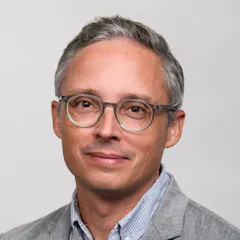
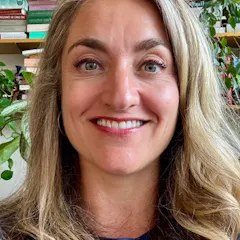
Aaron Ross Powell: Welcome to the Liberalism.org Show. I'm Aaron Ross Powell, Senior Director of Liberal Projects at the Institute for Humane Studies. A core theme at this year's Flourishing House at South by Southwest was breaking down barriers between experts and the public, between ideas and practice, and between people and the services that help them thrive. That theme was front and center in my conversation with Alicia Plemmons, Director of the Knee Regulatory Research Center at West Virginia University, and Lauren Hall, Professor of Political Science and Associate Dean at Rochester Institute of Technology. We talked about how decades of stacked healthcare regulations, from certificate of need laws to rigid scope of practice rules, have created a system that often undermines the very principles it claims to uphold, patient autonomy, access, and quality of care. We also explored where the real momentum for reform is, from interstate licensing compacts to direct primary care, and the growing recognition that well-trained providers deserve the freedom to practice what they've learned. Here's my conversation with Lauren and Alicia. Alicia, Lauren, thank you for joining us.
Alicia Plemmons: Thanks for having me.
Aaron Ross Powell: Healthcare in the US is pretty heavily regulated. The way we go about having children, birth is regulated, death is regulated, everything in between is regulated, services are regulated. And every one of these regulations has a story behind it that's not, maybe not everyone, but most of them, it's not crazy. You know, people saw a real, what they thought was a need for this. Um, the regulation was passed to protect against something. But it adds up to a system that both of you study, written about, creates an extraordinary number, a surprising number of barriers to just basic access to the things we want in our lives, things that would improve our lives. And I'm curious, that system, that, that heavily regulated system, what are we losing out on? Because we can talk about, like, this is preventing this particular thing, this bad thing from happening, but it's also preventing an alternative world of healthcare and services and everything related to it from coming into being. So what is that world that we're missing out on right now because we have such a complicated system?
Lauren K. Hall: Um, I can start and then I'll punt it right over to Alicia because I know, um, the, the, you can tackle the provider side, uh, really well. You know, I look at the, um, I look at both the patient and provider side. One of the things that I try to do in my work is I think we do a really good job at talking about the economic, uh, effects of regulations. I don't think we do enough work talking about the moral effects of regulations. So what I try to do in my work is, is emphasize the way in which the sort of stacked regulations, and I'm talking about things like the way that Medicare and Medicaid interact with certificate of need laws and state licensure, and then interact with things like building codes, right, to sort of centralize and consolidate and corporatize care. And so what that means, of course, is that when you centralize and, uh, consolidate care, it becomes really, really hard for people with idiosyncratic preferences to get those, those needs met. Um, I focus on birth and death because those are two spaces where individual preferences matter a lot. Um, we know, for example, from the research that, um, the way that you give birth, right, your preferences matter in terms of how much pain you experience, uh, the rate of complications, right, how difficult labor is. Uh, and similarly at death, right, you know, the, how stressed you are has a huge effect on pain and, uh, a, a variety of other things. Um, and so, you know, one of the things that I think we, we really struggle to see is how individual choice is, is, uh, limited by the, the kinds of systems that we have. Um, and a lot of that has to do with sort of the, the broader healthcare context, which is that the US is very hospital-centric. We, we focus a lot of our healthcare resources on hospitals. Uh, we push a lot of people into hospitals and institutions. Uh, and that means, of course, that you are then within that hospital, right, there's a certain logic to hospitals. They're on their own schedule. They have their own staffing needs. Um, and it's not anyone's fault, right? This is the thing, the crucial piece, right? It's not like anyone, there's no, like, nefarious, like, evil wizard, like, pulling strings, right? It's just the fact that there's a logic to systems that pushes against individual preferences and, and, um, and especially in these spaces where individual preferences are so important. Um, so one thing I'll mention, and we can dig into this later, is, you know, you know, the, the sort of US system is built on four primary sort of bioethical principles. Um, and I won't defend these as, like, the ideal setup or anything like that, but this is sort of what people learn in medical school, right, is that you have, um, autonomy, which is where we get informed consent. You have beneficence, which is medical care should provide a benefit. Non-maleficence, which is, of course, do no harm. Um, and then justice, right, the idea that there should be sort of relatively equal access or at least some care about who, who gets access to, um, to medical care. And one of the things that I argue is that the current healthcare system challenges all of those. So if you look at how we give birth and how we die, we often give birth in ways that violates people's desires, it violates people's informed consent. Uh, it often causes harm. Uh, we know that we have much higher rates of C-section, much higher rates of maternal mortality, although that actually there's some weirdness in the, in the data, right, uh, for that one. Um- And, uh, we do a lot of things that don't provide benefit. So, you know, if you look at things like fetal monitoring, um, late-stage chemotherapy, right? We, we provide a lot of medical care that does not provide any kind of benefit. Um, and then we have a lot of really unequal access. And so if, if what we're doing now challenges all four of the primary, like, sort of ethical principles that our medical system claims to be based on, that seems to me to be a real problem. So, and then you can stack on top the economic costs. So from the patient perspective, I think it's really... Like, we're, we're losing an enormous amount that we don't even know that we've lost. Um, and then on the provider side, we're losing a lot of providers or, or would-be providers, right? People who-- like entrepreneurial people in rural areas and urban areas who would like to serve their communities but can't. And that's where I think a lot of Alicia's work is so important in thinking about, like, who could be doing really exciting, innovative stuff and supporting people in our communities who, who, who can't do it.
Alicia Plemmons: I want to build on that provider aspect of it, because that's really where the nexus of my research is, is thinking about, okay, well, if we don't have providers for a service, who else can do it? Or are we keeping up with the training? Are we keeping up with the technology? Um, one part that I always want to bring back to people in this conversation was the regulations are built for the purposes of health and safety and quality of, of goods and services, and to also provide people that information. But after so many years, after so many gains in technology, after so many reviews of the data, e-eventually we get to understand these pieces better and what quality and safety means. And not all of those regulations are necessarily coming to that benefit. Uh, so one that we see in... I study non-physician providers. This is everything from your surgical assistants to your dental hygienist to your nurse practitioners to your midwives to everything in between, right? I look at what training looks like today relative to what it did in the 1960s and 1970s when many of these original regulations were built. And what we have today is completely different. Um, for example, the question in 1970 to 1980 was should certified registered nurse anesthetists... Do, do they work the same way as anesthesiologists? Are they just as efficient? But the thing is, in today's society, our technology has gotten so good that regardless of which one of those two provider types that you have, surgical complications are near zero. Um, we're no longer talking about which one's more or less, uh, uh, efficient when both have become so efficient it's, it's relatively an anomaly for something to go wrong. Or for example, nurse practitioners, right? So 20, 20, 30 years ago, the norm to become a nurse practitioner is to not only be a registered nurse, uh, but then you're gonna go through a master's degree with some clinical training to be able to get to that next level of, like, graduate education, and then you become a nurse practitioner or some sort of ad-advanced registered nurse practitioner, um, or advanced practice registered nurse, depending on, on who you're talking to. So today, that's more a doctoral degree. It's more commonly a doctoral degree across the board. It can be somewhere between 2,000 and 6,000 graduate hours of, of clinical training in a clinical setting, working with individuals while being supervised or working in an internship capacity or working with other providers so that you really get that hands-on skill. The, the course curriculum 20 years ago had very basic information about things like pharmacological interventions or how things work together. Today, it's, it's a completely different field. So being able to think about these regulations and updating with them. So you ask the question of like, what are we missing out in, in healthcare, um, with our current structured system? And I think a lot of it goes to a change we're seeing in how we're approaching regulations now. So for the longest time, the healthcare system's really been built upon, we're going to have all these different types of providers, and we're gonna tell them they can do X, Y, or Z, right? We're giving them permission. They can do nothing except for X, Y, or Z, whatever we've written. To more sort of thinking, well, if we're going to start incorporating new technologies, if we're gonna start thinking about this new training, if we're really going to keep up with the progress that's happening in healthcare, maybe we need to start saying, "Okay, well, we're gonna regulate you so that you're able to do everything that you're trained to do. You c- you can reasonably perform all of these functions except..." And then have the except be the X, Y, Z. Those, those areas where there is actual evidence of harm, as opposed to saying everything is not allowed until we can prove it's safe 100% of the time, every time, there's never been a problem. Um, what, what do we do to instead be able to, to grow? And I think that that's what we're missing out on in healthcare right now is that flexibility to adjust. We're seeing that with, um, lots of different types of AI really coming into the healthcare space. There's surgeons today that are using AI in most states for, for five or six years now to be able to help find the best way to get into a human body with the s-smallest amount of medical complications. Yet at the same time this year, we had several states introduce ba-blanket bans against AI in healthcare. So where are we? Are we coming together, talking to the providers, talking to the patients, really giving them that point of choice, and allowing providers to provide the goods and services they're trained to do while-- without accidentally putting in some sort of blanket ban that stops this progress from happening.
Aaron Ross Powell: It's interesting, as you were talking about the, the way that regulations were basically constructed for a world that hasn't existed for decades.
Alicia Plemmons: Minutes, yeah.
Aaron Ross Powell: Uh, I was thinking about, you know, medical science and, and just every last part of the what happens when you go to the dentist, the, the kind of care you get when you get cancer or whatever it is, has, in my lifetime, changed. I'm 47 years old, and it's changed a lot, and it's gotten a lot better. But if I think back, I don't notice that change, right? Like, if I think about, like, what, what was it like to be-- to go to the doctor when I was 15 versus now. It's that progress has happened incrementally, and I'm not, I'm not seeing it. And so if you were to ask me... I mean, I know now 'cause I talked with the two of you, but, like, if you were to ask me is how much has medical care changed and improved in the last 30 years, I don't know that I could give... I don't kn- I think I would underestimate it, and I think most people would probably underestimate it. Um, and, and so it seems like we're fighting almost like there's a, there's a status quo bias of it doesn't feel like the status quo has moved that much. These regulations have kept me safe. Every single one was for a good reason. Um, and so is there... Like, how do you route around that kind of uphill battle? Because I feel like if, Alicia, you are saying, "You know, we should allow these people who weren't-- who currently can't perform this procedure, can't undertake this activity to do it," my response might be, "Look, like, it seems to be working pretty well right now. And what you're telling me is you want someone with less training, who didn't get the credential, who isn't a MD or whatever the license is in the particular instance to get to, like, operate on me or not, or take care of me, or prescribe me medication, or put me under or whatever. We've been doing this system for a while. It seems to be working." Like, there-- It feels like how do you push back on that? How do you make clear, like, again, like, what we're missing? Because you're talking about here's these awesome technologies over here. Here's this awesome way that we could... You were talking earlier about letting paramedics from Pittsburgh come to Morgantown to work on... You know, like, how do we, how do we make that clear when it just feels like it's kind of always been the same and it's working well enough?
Alicia Plemmons: Sure. So I think there's a couple different reasons why we think it's always been the same, right? So part of that is going to be because you may not have noticed how your provider has changed. Um, like the last time you went to an urgent care, did y- did you see a physician, a nurse practitioner, or a physician assistant? A majority of Americans can't tell me that because they're not really gonna know what the difference is at the end of the day, unless they've spoken to it or they're really paying attention to name tags. So they may not have noticed that there are new providers providing some services. Also at the same time, I mean, th- we do have a physician shortage, right? I mostly care about non-physician providers because I'm trying to figure out how do we bridge these gaps. At the end of the day, we could make other changes. We could allow for more residency spots. We could really invest more into the assistant physician education program, which is people who didn't re- match for m- residency. In some states, they're basically allowed to work an internship under a physician as an assistant physician to get some of that same training. We can do those programs, but those programs, which are awesome, are going to take 20 years plus to really make a difference, right? We're talking about people who are starting to go through their education now. While on the other hand, we're starting to think about, well, we do have people who... And it's not that they've gone through a lesser amount of training. They've gone through training for something because their programs have changed. Um, so nurse practitioners in many states could not, you know, um, authorize any sort of Schedule II medications. But then we also had 10 years after many of these rules were written where they had this pharmacological interventions, where they were enrolled in, um, many of the different programs for being able to track, uh, opioid use and being able to figure out, like, where different people are, are getting their medications from or if there's over-prescribing happening. We have so many other fail-safes in place. But when we're thinking about how is this different from 20 years ago, I like the idea of if I need, for example, a psychologist, and I did 20 years ago in South Carolina. For me to get a psychologist, um, took me, oh gosh, probably 16 weeks to get into a provider. I eventually found out that at the time I needed medication related to generalized anxiety. That took another eight weeks to see a psychiatrist, and then it took me quite a few more weeks to get approved for a medication to get my new medications and everything else. That's not the same reality that someone's facing today. We may not always realize that that's an improvement. In many different states, you can now go see that psychologist after four or five weeks. It's still a significant wait time, but in some states they can even start your medication earlier, or they can work with your physician to start some of your medication earlier while you're waiting for that next step with a psychiatrist instead of waiting for an additional three months. Rethinking about who does what within, within the scope just allows us to build a better team environment. Uh, for example, if you run out of insulin in the state of Idaho, they're one of the first ones who really came around to, to this, and now many other states have copied it. But if you run out of insulin, um, there's only 16 endocrinologists in the state of Idaho. Like, that's not a lot, right? There's not all the people that they can go to to be able to get more medication. But, but your pharmacist has been prescribing your insu- or has been filling your insulin medication for 20 years. They know everything about your health. They're aware of every side effect you've ever had. So crazy idea, could you go to your pharmacist and say, "Hey, I can't get a doctor's appointment for a few days. Could you please give me a ref- refill to hold me over to that point?" That's something that for some reason in all 50 states you couldn't do until recently when Idaho decided to do it, and then Montana decided to copy it, and then some other states have now also s- decided to start integrating these pieces. So healthcare's gotten better, but I think it's because while y- at the end of the day you're still getting the same services, you may not notice all the new touch points that are happening within getting you those services faster or more efficiently.
Lauren K. Hall: So I'll question two quick, two quick sort of assumptions in your question, and, and I think they may have been intentional. Um, first, I think, I think it's important to recognize that a lot of these regulations were not put in place for good reasons or for safety, right? Um, if you look at the history of a lot of these regulations, they are primarily protectionist, right? They're meant to protect, um, physicians from competition. Um, uh, there's an, you know, a, a number of really great... Uh, Paul Starr's book, The Transformation of American Medicine, talks about sort of the shift from a fairly pluralistic medical ecosystem in the early part of the 20th century, um, to the sort of physician control, right? And, and, you know, the pluralistic ecosystem, I think a lot of people look down on because you had charlatans, right? You had snake oil salesmen, right? You had people who were in-- who were taking advantage of the situation. Um, but you also had people like midwives, who were very well trained, who actually had lower, you know, maternal and infant mortality rates than physicians did at the time because physicians were much more interventionists, and they didn't wash their hands. So I mean, like, there's trade-offs, right, to how, to how this sort of, like, movement to regulate the medical industry and really prioritize care around physicians and hospitals sort of manifested. Um, other trade-offs that happened along the way, right? The closure of Black medical, uh, medical schools, which meant that we actually had more Black physicians in the early part of the 1900s than we do now. Um, and so I think there's all of these sorts of things that people... Like, there's a sort of historical ignorance of how pluralistic the ecosystem used to be, um, and then how these regulations really sort of centralized medical training and centralized medical care. So the first piece I think is that not all of these regulations really came from a place of patient safety. A lot of them came from a que- the question of, how do we regulate the medical industry around the needs of primarily white male physicians? Um, so the second piece, though, is that I think it's really hard for us to think about, you know, what... It's really hard for people in general to see what didn't happen, right? Um, and, and certainly in the case of the U.S., I think we need a, a more comparative approach. There's a lot of things that the U.S. system does well. So if I have a rare form of cancer, I wanna be in the U.S. for that, right? If I have, like, certain kinds of, like, acute issues, heart disease, I wanna be in the U.S. Um, but there's other stuff that I wouldn't wanna be in the U.S. for. And so, so I think looking at sort of, like, what other countries are doing well, what other countries are not doing well. Um, and in the U.S., of course, we're spending close to 20% of GDP on healthcare. So it's a very expensive system. We have very high rates of medical debt. I believe medical debt is the number one cause of bankruptcy in the United States. Um, and so that's a huge cost to families, right? It's a huge cost to individuals. So thinking about, you know, the question of, first of all, where these regulations came from, and then what the costs are of these regulations, right? Is the system actually working as well as people claim? Um, and again, there's, there's some areas that it's working reasonably well in, and there's other areas that it's actually really, really harmful. And so what we need to do better, I think, in general, is tease out which parts of the medical care, you know, which parts of the medical system are working effectively, which are not, and then try to understand how to diversify providers, diversify sort of the system in a way that helps us get the benefits without... You know, you don't wanna just flood the market with unlicensed practitioners, right? That's not the goal, right? The goal is to do what Alicia's pointing to, which is figure out who are the people who have the relevant training, and then free them to provide the reas- the kind of care that they are trained to provide. And that's what we're not doing very well.
Alicia Plemmons: You don't need a surgeon to draw blood, right? There, there's many other steps in between. And then I think that's... Sometimes we're trying to fix a nail and hammer problem with a sledgehammer of, of generalized, um, very strict regulations without thinking, "Is that the appropriate tool for the issue?"
Lauren K. Hall: One just really good example of that is the fact that in the U.S., most women give birth with a trained surgeon. That is not the norm in Europe. That's not the norm in Canada, right? Like you-- We go from zero to 80, right? Most other countries, you, you-- There's a triage model, which is the way that it works in every other form of medicine, right? You start with a relatively low-risk mother, and you have a, a provider who's capable of handling low-risk pregnancies. When issues arise, you then escalate up to people who are able to handle relative levels of risk. So we don't do that. And so I think there is this sledgehammer approach, which is, well, we need a physician for everything, right? We need a trained MD for everything. Um, and that's actually not the case. And if you use a trained MD for everything, you are going to get a sledgehammer in situations where you'd actually be much, much better off with, like, a paintbrush, right? I mean, we're, we're actually just using tools incorrectly.
Aaron Ross Powell: I'm curious from the advocacy side, 'cause both of you have worked... It's not just that you're studying this stuff. You're trying to get these regulations, laws changed and have had success in doing so. A lot of public policy we talk about when you're talking to policymakers, you talk at this, like, macroeconomic levels and the economy and, like, broad systems. Um, does that work in what you're talking about health regulations versus storytelling? Because I'm struck... Both of you just gave a talk upstairs at this fancy venue that we're in right now. Um, and you both leaned heavily on storytelling. Lauren, you started by talking about the experiences of individual people. Alicia, you talked about the experiences in your community. Is that the way to move the needle on this, is to not talk about kind of the broad statistics of how many providers there are or how much costs, how much it costs for various things, but instead is it more effective to talk to find those stories of, like, this person either... This person missed out on this. This bad thing happened to this person, and empathy triggers. Um, or, like, here's this awesome thing that these people had access to. It was phenomenal for them in a way that makes us feel, like, really good, but we can't give it to more people.
Lauren K. Hall: So I, I try to balance the two. I mean, I, I, I'm, I'm very skeptical of public policy based on anecdotes. I mean, I think it's actually often dangerous to sort of say like, you know, "Here's this one terrible..." I mean, I, I think we actually do a lot of legislating this way, right? "Here's this one terrible outcome that happened to one person. We need a law to prevent it," right? So I'm- I worry a little bit about that effect. But I do think that it's really important to pair, you know, the macroeconomic data, the economic efficiency arguments with the sort of real world impact that these regulations have on people's lives. Um, and so I do that a lot in terms of trying to explain to people what's lost. Um, you know, there's, uh, the, the example that I often give is, uh, sort of a, a con- a, a sort of combination of a number of women that I worked with over the pandemic, um, who were trying to start a birth center in the Bronx. And I sometimes have people come back to me and they'll say, "Well, you know, did they succeed?" And I say, "No. Like, they don't have $500,000 to get through the certificate of need process." Like, that wa- Like, there's no happy ending at the end of this, right? And so I think being... You know, having stories that show what couldn't be built, right? Like, what people tried to do. Like, the way that they tried to serve their community and couldn't do it. Um, those are the kinds of stories that I think we need to tell more of because we have lots and lots of examples of stories of, you know... I mean, it's, it's easy to point out sort of the positive outcomes, but it's much, much harder to point out, like, where things didn't grow or, like, what wasn't built. So I think, you know, for me at least, I think it's a combination of, of focusing on data and stories.
Alicia Plemmons: Mine's roughly similar, except I sat in on so many different pieces of regulation that were going through the bill cycle, and they were talking to legislators, and I sat there listening for a long time before I ever started working on sort of this data-driven approach to analyzing problems. And I realized that many of these healthcare bills were the storytelling, right? You would have someone come in to talk about this one example, this one time, and the sky fell, and it was terrible, and someone else will say, "Well, the sky fell in this completely different way, and that was also terrible." And that frustrated me because at the end of the day, I wanted to know, okay, what percentage of the community is actually affected by this? Um, what is the actual statistics of this happening? What is the safety ratings? What does the malpractice data say about it? So many of these back and forth sort of fiefdom yelling at each other storytelling pieces that I saw in the legislature, I didn't want to be an advocate for one side or the other. I just wanted to bring education to the discussion so that these legislators were making better data-informed decisions. So I started listening to the stories, and when I would hear these stories, I would go then test to see if they were actually happening. Um, for example, I heard so many times that, like, if psychologists were going to be able to prescribe medications, that it's just everything would go absolutely wrong, and there'd be huge rates of misprescribing. So I went to go check the malpractice rates and the misprescribing rates and see what happens, and, uh, we didn't find evidence of that. Uh, we heard several times that if certified registered nurse anesthetists were allowed to work with or without, like, an in-room or partially, like, within the hospital supervisor at all times, that the sky was gonna fall and it was gonna be terrible because one or two different examples. So then I went and looked at hundreds of thousands of cases of whether they were supervised or not and to be able to analyze these sorts of things. So what my role and my goal is in sort of this education space, and where I think academics like me and Lauren can really give that piece, is by respecting that the story is there, listening to a story, maybe even being able to say like, "Oh, that's a really good point," and, and being able to help bring this to someone through the framework of a story, but making sure that it's actually data informed, right? At the end of the day, we're testing to make sure, like, are these stories of cause? Uh, are these stories going to be reflective of what that real reality is like? And, and I think that's an important thing that we contribute to the conversation.
Lauren K. Hall: Well, and I think, you know, especially in the medical space, availability bias is, is very real. So the... You know, what physicians, um... If you talk to any, you know, um, ambulance worker, right? Like, uh, im- like, ER worker, right? They all have horror stories, um, and it's because they see the worst of the worst. Um, when I was interviewing, um, o- obstetricians for my book, I, I, um, interviewed Chris Glantz, who's a... I think he's retired now, but he's a maternal fetal specialist, so he sees the highest risk patients. And his argument was that every single resident should have to- every single, um, OB, uh, resident should have to do a home birth rotation. Because from his perspective, right, if you only see the births that end up in the hospital, if you only see home births that end up in the hospital, you are, you are, uh, you're getting this very, very skewed narrative about how dangerous home birth is. And so this is the, the danger of storytelling, is that you only tell the stories that you're aware of. And so I think what, what academics can bring to the table is a more diverse set of stories, right? A more diverse set of stories that more accurately reflect the landscape. Um, and that's, I think, a really important piece of this because a lot of the, a lot of the storytelling we do, and especially in the media, right, it's, it's subject to a range of biases, particularly negativity bias, um, which means that we're not getting accurate storytelling, right? We're getting storytelling that's based in fear, which often leads to over-regulation and, uh, excessive legislation.
Aaron Ross Powell: Where... I'm curious where both of you see the most opportunity for real meaningful change in the near term. Alicia, you mentioned this shift in kind of regulatory thinking from a permission model-
Alicia Plemmons: You can be permitted to do X, Y, and Z-
Aaron Ross Powell: Yeah... to instead we can exclude you from X, Y, and Z-
Alicia Plemmons: Yes, exactly...
Aaron Ross Powell: but do everything else you're trained in.
Alicia Plemmons: Yeah.
Aaron Ross Powell: So, like, that seems like progress. Um, where else do we see the possibility of... 'Cause often these are very much uphill battles. Um, what are the things that give you the most hope in the near term?
Alicia Plemmons: I have a whole hope speech figured out here. I'm not gonna give you the entire thing. Um, so you're right. The way that we look at these regulations, starting to think and adjust for the fact that this is a changing landscape, and instead we only find the, the actual cases of harm and working against that as opposed to just saying nothing is allowed at all except for these few cases where we saw no harm. Um, I think that that's a good shift because that allows us to bring in new technologies. That does allow us to try new things and to, to get new experiences. But the other place where... And this seems so simple. It seems so simple, but it is a huge problem in the US, is just being able to move licenses between states. There's several states that are in the IMLC, which is the, um, Interstate Medical Licensure Compact. The whole reason that that exists is 'cause it was really hard for physicians to go from one place to another. And it turns out when you're one of the best heart specialists in the entire US and you can't go to Wyoming to help a patient because they happen to not have your license on a book there at that time, that's, that's a problem, and that's an issue, and it's stopping people from getting these types of care. So we're seeing these compact models. I'm a little worried with those just because they, they really have started to come together where states are saying, "Okay, whoever has the highest level of regulation, that's now the regulation for everyone." And that's one part I'm a little worried about. But we also do have different things coming in, like universal licensing recognition. Um, I mean, just in case no one saw our, our presentation here who's also listening to the podcast, my example was, uh, in Morgantown, West Virginia, we love our football, and sometimes students go a little too far during football games. We had paramedics in Pittsburgh that have trained some of the best medical universities, like they are highly, highly regarded paramedics and EMTs, that could not come down to Morgantown 45 minutes away to help out during football games to make sure people were able to, like, get ambulance rides when they need that. That's wild. In West Virginia, we now have universal licensing recognition that allows some groups to be able to come in who have similar training, um, to, to use their license here immediately. While they're going through the licensure process, they can start working. They can go ahead and start helping with those ambulances. I think that that's a huge shift we've seen in many states lately into saying not only, um, are we gonna start allowing people from other states in so that we can, like, get healthcare providers here quickly, which that was something that was temporarily allowed in several states during the pandemic, and many states decided to keep it, and that's why many of them are looking at these rules now of, oh, it turns out when we have a huge demand, we may need providers quickly. What do we do? But we're also seeing this starting to happen on an international scale, too. Um, Tennessee, I think, was the first one, but we've had quite a few states recently we have put through res- uh, reg- different regulations that allow for international physicians. So if you have, you know, the, the best kidney specialist in South Africa, if you have the best, um, ENT doctor in the world in Japan, being able to allow those international graduates to come into the US and start working without having to redo their entire residency program, which has been the rule up until now, um, in most states, that's also a game changer because that's being able to bring in some of the best minds to immediately be able to start seeing patients. Uh, so that's where I'm seeing a lot of hope, is that willingness to say, "Yes, your training and your expertise, we recognize it, it matters, and you can go help the patients you have devoted your life to helping."
Aaron Ross Powell: Where, where do you see the next area of hope?
Lauren K. Hall: Yeah, I think I'm seeing a lot of people opt out of the current system in really interesting and sort of innovative ways. Um, so I, uh, there's a model in Western New York, um, what are called comfort care homes or homes for the dying, and these are small, two-bed, um... They're not clinics. They're just private homes that are, that are run by, um, donations. Um, but they provide a space for people to, um, to receive hospice care with, uh, trained nursing staff. Um, they're not charged for it. Again, it's, it's usually partnerships with churches or synagogues. Um, and, uh, and they fly under the regulatory radar because they stay small. There are two beds or, or fewer. Um, and, uh, and so, you know, that's one sort of innovative way that people have kind of like carved out a space for non-institutionalized death. Um, but I think we're seeing this more broadly in the direct primary care model, so that's a membership model. Um, uh, it's often called concierge care, but... And, and it used to be, again, more associated with the wealthy. Um, but now I think we're seeing a growing number of those models for, you know, middle class and lower income folks. Um, and the direct primary care model just says, "We're not gonna take insurance. We're not gonna deal with Medicare. We're not gonna deal with Medicaid. We're just gonna charge a monthly fee, and you get access to your physician whenever you need access to that person." Um, they typically have lower patient loads, and they spend more time with patients. You get more... Y- you have fir- you know, same-day appointments. Um, and so what I'm hoping happens, and what I think we're already seeing happen, right, the number of direct primary care physicians has, like, almost doubled, um, in the last, I think, like, five years. Um, and what I'm hoping happens is that people start seeing these models, and they start questioning the current model, right? Um, because y- it's really, really hard for us to see where things could go unless we have something to look at, right? But I think as we start seeing these models kind of, I think about it as like a sort of, like, regulatory erosion, right? They're sort of chafing away, eroding away the edges of some of these regulations and showing people what could be a possibility. Um, so I think those kinds of things are really important. Um, I, I think technology, I think AI is gonna just revolutionize the medical industry across the board. Um, and I think there's gonna be a lot of disruption, but within that disruption, I think there's also gonna be a lot of experimentation. New models are gonna come out of that. So I'm, I'm actually more optimistic now than I probably was four or five years ago. Um, and, and I think we're just having different conversations that, than we were, um, certainly when I started writing, you know, which was, like, 2015 or so. Um, so I, you know, I think there's, there's more, um, openness to pluralism in the medical and healthcare space than there was, and I think that's a good thing. We're gonna start seeing people be able to compare models, get data from different models, and that's gonna, again, allow us to make better decisions.
Aaron Ross Powell: Well, on that hopeful note, thank you so much for joining us.
Lauren K. Hall: Thanks.
Alicia Plemmons: Thanks. This was fun.
Aaron Ross Powell: If you enjoyed my conversation with Lauren and Alicia, you can find more like it, along with original essays from contemporary liberal scholars, at www.liberalism.org.



 Apple Podcasts