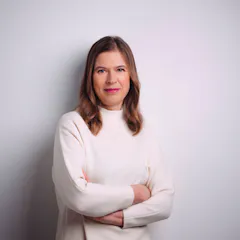
Aaron Ross Powell: Welcome to the Liberalism.org Show. I’m Aaron Ross Powell, Senior Director of Liberal Projects at the Institute for Humane Studies. Americans tend to hear “digital government” and picture surveillance. Estonia built one anyway and ended up with citizens who own their data, can see who has looked at it, and can count on prosecution for anyone who peeks without cause. In today’s episode, my colleague at IHS Paul Matzko sits down with Kersti Kaljulaid, who served as President of Estonia from 2016 to 2021. They get into how that system earned public trust, how Estonia counters Russian propaganda without policing its own citizens’ speech, and why she’d like AI to stop solving chess problems and start weeding her carrots.
Paul Matzko: It's a pleasure to have you with the podcast, President Kaljulaid.
Kersti Kaljulaid: Thank you.
Paul Matzko: Estonia is a remarkable country. It shook off Russian control only 35 years ago and spent that time developing a thriving economy. It's a global epicenter for innovation and efficient and transparent governance, which means that our guest today, former Estonian President Kersti Kaljulaid, remembers what Estonia was like prior to independence and has spent her adult life watching, and eventually leading, part of that transformation. So let's get started with some familiar territory. You've talked about this in a lot of interviews. About 95% of Estonian households use the Internet. It's one of the highest rates in the world, and teaches digital literacy in every school. This rapid adoption of the Internet was a 90s policy success story named the Tiger Leap. So can you explain for us where that policy came from, and why it was ultimately embraced by so many Estonians?
Kersti Kaljulaid: Well, where should I start? I start in 99, and Estonian government moved to a new location, and me and some other advisers to prime minister, who had come from private sector, took this opportunity to convince their prime minister that we don't want to lug around papers anymore. And we established intranet for government. And I'm telling 99 now. If any of you works in private companies, then think, when did you start having intranet? I bet it would have been 90, 91, no later than 92. And to this day, some governments run papers. And we were like, we worked in private sector. Why on earth should we here in public sector, I mean, work on paper, carry these papers around? And we decided not to, which meant that the government room got computers, started to look like a normal boardroom of any enterprise of that time.
And now comes the shock for me at that time. Immediately after we had started with this online government system, journalists from Western, I mean, serious newspapers, Economist, Financial Times, I mean, whatever, Le Monde, Americans, come in, and everybody's like, "How can it be that the government is running on computers?" And we were like, "Are you crazy? And do you run your business in your newspapers on paper, then?" "No, of course we have intranet." "So this is nothing else. It's intranet." And you know, the system paid itself back in three months' time, by the, I mean, covered newspaper space which it took up, compared to if we had advertised, like, Estonia positively transforming, or whatever.
And then we already had at that point electronic banking in Estonia. It was offered by Swedish banks, by the way, because Estonians were so poor that offering us offline services was not feasible. Establishing, you know, all the points where people go, and hiring the tellers and all this, couldn't do. So because technology existed, they started to offer internet banking services to Estonians. Including, by the way, to retired people, who got the online services for free. And because pensions were very low in this early stage of transformation, well, old people were very happy to save a penny and get their business online. So this was the first thing, 94.
Now, in 97, the government had this problem that, you know, Estonians were not used to going to file their taxes. Because in Soviet Union there is no salary, no taxes neither. So government has a problem. I mean, Estonians are never going to go anywhere and stand in the queue to get taxes paid. If government funds taxes, it has to find a kind of painless way of getting taxes. So they talked through with the banks and said, could we maybe, if we established kind of online tax system to pay taxes, would you allow us to use the interface which you are offering to people, so that people could very easily, easily join the tax board and declare the taxes? And they allowed. And it was massively popular. My first tax declaration goes back to the year 1997, and I've never seen a tax man in my life. Never.
Paul Matzko: You're not missing anything, I can promise you that.
Kersti Kaljulaid: I believe so. Yeah, indeed. So basically this was the first online service, because government had the carrot side, so it wanted to offer people an easy way to pay. And then, of course, government realized in 1999, when I was already working with Prime Minister, that actually we can save a lot of more resources and time for people and effort to get more services online. And now the bank said, no, we are not going to allow you to use our interfaces. Because, you know, this online identity verification, it's like passports, and passporting rights belong to government.
But they said, they also have a technology, the same Swedish banks and Telia, a Swedish telecom company. And they said, but we are ready to share this technology, which was called Keyless Signature architecture, with you. Very similar to blockchain. That's why people sometimes doubted that maybe a blockchain has been created by Estonians. It hasn't. It's very inefficient compared to KSA. Has some more functions, though, but okay. Anyway, this technology was not created by us, but we took this technology, created an identity card for our citizens. It was very hard, I can tell you, to convince the Minister of Finances, because I couldn't show him what is the return. And frankly speaking, had I known what was at stake, and the digital advisor of Prime Minister, Linnar Viik, as well, had we known what was at stake, we would have had our legs shaking. We didn't, because we didn't. We expected every government to be online and offering online services in five years' time. And our argument for Prime Minister was, if we go quicker, we may get it somewhat cheaper, to be the sandbox. You know, we never expected it will last, honestly, but it has lasted.
And then we still had a problem, because, like nowadays you can see also other governments in early stages of kind of public service offer, people get very tired by, I mean, always re-giving their data to the systems, to one system, to another system, and to the third system, and so on. And we said, we don't want this to happen, but we also didn't create a big brother, like one big database. Instead, we created something which is called once only principle. If the government has asked once, it has to know next time. And you as a citizen, if you have given the government your address, and where you work, and how many children you have, then next time government asks it, you give them permission to look in their files. But the data still belongs to citizen. I am the only person who can put my file, starting from my medical data down to my traffic license, whatever, in one page and place. Nobody else can. I'm the only one who has full overview. Everybody else has the overview which comes to them because of their profession. And even if you professionally have access, if you do not have the need to know, you still cannot check it. And we've taken people to court. It's a criminal offense, who breaches in that. A few mediatized cases, and I can promise you, people don't check anymore their old boyfriend's new girlfriend's salary. Which is how it happened.
Paul Matzko: Which is very much in the news today in the US context, Flock cameras and people using, accessing them inappropriately to stalk exes and so on. And I think this gets to something. In the US, we tend to be quite worried about government surveillance, privacy, and that kind of thing. So I imagine many of our listeners may react with apprehension to the idea of government even having access.
Kersti Kaljulaid: We do, by the way, and that is why government set itself an ironclad restrictive framework. And this is what I've been explaining. If somebody noses around in data, criminal offense. We had a really, which probably, I mean, gives you a really good example. One doctor in Estonia was, went running and had a heart problem. So was unconscious, was in hospital. All his colleagues were checking his medical data, because technically they have the access. But later they were all taken to court. Even if the doctor said, he recovered and said, I don't want them to be taken to court. But they had breached the law, because they had checked, I mean, how to help my colleague, who scrambled into his healthcare file. And I mean, these things teach people that government really doesn't touch their data. And of course, regularly there are civil servants who say, it would be very good if we could look this and that. And then it is for the public opinion, and for the parliament, and I have to say for our extremely free media, to, I mean, kind of push back on these developments. And I think nowadays, because we have long history already, we actually understand far better what is safe and what isn't. I mean, telling government everything, and telling it can do with data whatever, well, this is no go. But, I mean, if government justifies and proves that it treats your data safely.
Paul Matzko: Yeah. I think the contrast between what you're describing, and in US context, most of us would never know if someone in the government accessed our social security data. Our sensitive data. It could be a teenager from the DOGE office nicknamed Big Balls doing whatever he wants and transferring our social security data to unsecure servers, and we wouldn't know. So it's not only that, you know, about access. It's about, it's tracking. You have the, I assumed folks, citizens of Estonia have the right to know who has access, that gets logged and tracked.
Kersti Kaljulaid: This is true as well. But, I mean, cybersecurity threats are nevertheless there. And these we try to counter this way, that actually our cybersecurity authority works together with private sector. And in Estonia, there are no, there are no penalties for enterprises who face attacks on their systems and report them to the state. Instead, the state comes and helps to resolve these issues. And this guarantees kind of no guilt environment. So we, nobody's trying to hide. Nobody's trying to cover up. People own up that they may have a breach problem, and then, then you can cover for them. But of course, it is not cheap. And I'm afraid it's getting exponentially more expensive to defend the data. And here, I mean, yes, I mean, first, I think no government nowadays can say that, I mean, data breaches in electronic files cannot affect them, because they all have them. On the other hand, their governments are not alone. Private sector has much more sometimes information about us. And with our approach, we want to make sure that private sector data is protected as well.
Paul Matzko: Absolutely. So speaking of bad actors in the online ecosystem, you have to worry about the threat of a variety of online, you know, often Russian threats, hackers, misinformation campaigns. I saw some reporting the other week about how, you know, after Ukraine bombed several Russian data centers, the amount of malicious bot traffic fell by a significant amount. So this is, you know, it's very much, it's in the news right now. So what is Estonia's approach to dealing not just with data breaches from internal misuse, but malign foreign actors?
Kersti Kaljulaid: It's so funny, you know, that, I mean, no, everybody here takes notice. I mean, when Yandex has been down, you have intelligence companies in this country, and intelligence services in this great country, have been telling you for years, there are Chinese actors, there are Russian actors, there are some other malign governmental actors, I mean, trying to influence people's minds with StratCom. It's very common everywhere, also in Europe. But, you know, in our case, it's, it's, we may be a little bit better prepared for that, because we have expected Russia to try to undermine our statehood all the time. And we have, for example, voluntary organizations like Propastop, Stop the Propaganda, which is voluntarily sifting through, I mean, all this, all this slush online. And also, of course, we have the legal base to shut down those groups, for example in Telegram and elsewhere, who are, I mean, undermining Estonian statehood. And if you are, happen to be a Russian citizen living in Estonia, participating in these activities, so then we are really sorry, we send you to the country which you so love. So, I mean, it's, it's, it's kind of a multi-layered defense system, starting from us being resilient because we know it exists.
And, and, and, and actually, I also think that there are, I mean, capacity problems even with this kind of activities. So trying to influence the result of US elections, or French elections. President Macron was the first one to call President Putin out, that they had influenced their elections, on the steps of the Élysée. So basically, I mean, influencing bigger elections is far more rewarding for Russians than doing anything like that in Estonia. But they reach far. For example, when you, you probably remember, a few years ago, about seven, eight years ago, in, in the Chilean protests, where Chilean people protested against the classic Latin American problem, that only few people have money, everybody can vote, but nothing changes. So basically this turned extremely violent, and, and the people were harming the middle class in the protest. And then I asked, why are they doing it? And they said, our social media is full of Russian, Chinese, and Venezuelan agents who are kind of calling for people to, let's go and burn that metro station. I was like, if you burn a metro station, how exactly is it hurting the rich people in this country? They're not taking the truth. This is the StratCom. Also, when NATO came to Estonia in the format of Enhanced Forward Presence, then every German journalist asked me, absolutely everybody, "Aren't you afraid of German troops east of Berlin?" I was like, that's Russian StratCom. Don't buy it. And it was.
Paul Matzko: So misinformation, whether Russian or Chinese or domestic homegrown, definitely real, definitely a problem. The civil libertarian in me does worry about how the government reaction to mis-, dis-, and malinformation can actually itself become a threat to free speech and freedom of thought. Whether that's through informal government pressure on social media platforms. There's those different ways that combating misinformation can itself be a kind of thought control. So how do you balance that very real interest in combating malign foreign actors with the danger of the government suppressing actual citizen dissent?
Kersti Kaljulaid: First, we have extremely high tolerance on people telling ugly, nasty, untrue, whatever things about, I mean, public personalities in Estonia. You are expected to put up with all of that. For example, in my case, the common problem is that I walk with too long skirt. I have a very big nose. And of course, all of us are stupid and idiots and all these things. So basically, you get all of this. Of course, it goes further. Women politicians very often say nobody has, I mean, slept with her for a long time, that is why she is such a bitch. I mean, these kind of things which men suffer less about. But, I mean, you don't sue these people. And unfortunately, also most newspapers don't remove these kind of statements. I would like if they policed a little bit better their commentarium, but they don't. And this is a price you pay for actually making sure that you do not err on the other side of the freedom.
What is forbidden is calling for killing of other people. And even there, you only get to be taken to court if the police believes that there was something behind it. Just telling "kill the president" doesn't cause any trouble in our country. But, I mean, calling upon "kill the president or prime minister," and following where she or he lives, and seeing where the family is moving, and so this constitutes a criminal offense, obviously, like in every country. So I tried to show you that, I mean, we are mindful of the freedom of speech in our country.
And indeed, also it depends on political actors themselves. I mean, if, for example, political parties bash media, and we've had one government who tried this, I mean, they didn't have answers to the questions of the media, then they said the questions are wrong. Then you have to have other part of the society, for example, me as a president, who would say, government, this is free media, don't touch them. Estonia nowadays is the second freest media in the world. And frankly speaking, we've been rising like rockets. We used to be like 13, 14. Now it is second. And it's not us. We are like we always were. It's the others falling down below the standard. We've definitely not got better.
Paul Matzko: So, I mean, I'm struck by how many of your answers, there's a role for government and for policy, but there's also a role for civil society, for, you know, when you're talking about, you know, fighting against propaganda and so on. There's a role for civil society. There's a role of culture, like a culture of free speech, the folks being willing to tolerate a certain level of abuse rather than immediately reverting to lawsuits and the like. There's something else in this front that I think would be timely for a U.S. audience. There's been a move here to restrict Internet access to young people through, like, age verification laws, even outright youth social media bans. What are your thoughts on those kinds of policies? Is that something that's ever been considered in Estonia? Is that something that's ever been considered in Estonia?
Kersti Kaljulaid: Then older, smarter guys around me said, we never regulate anything which we cannot implement. Simple as that. You don't put the law in place knowing the enforcement is impossible. And we don't do. And yes, indeed, you could argue that, I mean, at least it gives the signal and so on. I'm sorry. I mean, you just make state obsolete if you approve laws which you do not thereafter apply. So basically, it's parental responsibility. Schools, of course, can do programs and trainings for children to make sure that they are well protected. But, of course, it is still, I mean, a criminal offense, for example, to, I mean, to engage in, well, let's say, talks about sexual activities with minors in Estonia. And we have, actually, our police is sifting through this fora and finding people who are doing these things, and then they go to court. So, again, I mean, you have the law which you can enforce, not the law you cannot enforce. And then you truly show that you are enforcing that law.
Paul Matzko: So, to jump back a step. So we talked about some of the ways in which Estonia has digital access to certain services, like, it was early.
Kersti Kaljulaid: All services.
Paul Matzko: All services.
Kersti Kaljulaid: All government services. You can get married online. You can get divorced. You can buy a car, sell a car. I mean, all is online. Notary office is online.
Paul Matzko: You can vote online as well, right?
Kersti Kaljulaid: Absolutely. I mean, yeah, that's 2003. I've already forgotten that.
Paul Matzko: Yeah.
Kersti Kaljulaid: All this amounts to something which we don't think. I mean, for us, this is normal. But I remember, I was in office as a president, and I was campaigning to join UN Security Council, and I was traveling a lot. And my Austrian colleague, after I had fallen asleep at a certain celebratory concert, because I had again been doing these rounds around the world, he was like, "How can you travel that much? If you reach back to your office, the paper files must be that high." And I hadn't even thought that, I mean, I've signed laws from Antarctica, on the ship somewhere at the Drake Strait or something. I put Estonian prime minister into office from Portuguese parliament building. I mean, that we, of course, we realized it as a big show about the real life in Estonia. I mean, I was not restrained in any way by the fact that I have to sign stuff.
And so, I mean, in 2003, when I was voting electronically, my colleagues, I was living in Luxembourg, my colleagues who came from Portugal actually had to physically fly to Portugal to be able to kind of vote. And that was an obligation. It isn't, by the way, in our country. But it is there. And then they had to fly. And then I showed my Portuguese colleagues, look, I opened my laptop.
Paul Matzko: Yeah. Making them jealous. That's good.
Kersti Kaljulaid: Absolutely.
Paul Matzko: Yeah.
Kersti Kaljulaid: I really, I'm a nasty person.
Paul Matzko: Rubbing it in.
Kersti Kaljulaid: I like people, so you have to feel the pain.
Paul Matzko: So, in the U.S., we lump a lot of these kinds of policies under the headline of talking about state capacity, the idea being to increase the efficiency and effectiveness of government agencies. But I'm always struck by how the term assumes something. It puts the state is always in state capacity. In a conversation with another former Estonian president, Toomas Ilves, he put it this way to me, that government and governance aren't synonyms. So, how do you think of Estonia's approach to state versus non-state actors in solving governance problems and providing effective governance?
Kersti Kaljulaid: Here depends on what you look at. I mean, if you look narrowly kind of state functions, then, of course, state has functions where wider public cannot really interfere. In defending the country. Yeah, of course, you serve, but, I mean, responsibility and leadership is national. Education. Education, egalitarian education, very important in my country. Government's responsibility. Health care. To all. Government's responsibility. Road construction. Government's responsibility.
But as soon as you come to smaller layers of services, for example, social services, like helping special needs people, I mean, these services apply for a small group of people in any region. So if you create a huge government model to provide these services in individual places, then you are, first, wasteful. And then, when the system is ready, nobody's happy with the service, because it's not tailor-made enough. And third, when the service is just outdated, you cannot cancel it, because, I mean, always there will be one person who is against it. And that's the person who is coordinating it at the ministry's level. So far safer is to kind of have, indeed, this kind of community participation. Like you do, I mean, I think also in here, in Europe, in every country, you have firefighters, for example. They're volunteers. They're volunteers supported by the government.
I mean, similarly, we have quite a lot of social programs in Estonia, and youth-oriented programs, who are basically supported by the government, but the service is provided by volunteers. Sometimes they even, I mean, turn into professionals. They get paid, even, for what they are doing. But the underlying fact is, it's not the government-provided service. Hence, when it is not needed anymore, you can cancel it. So I think we run this way. I mean, we have a clear separation of what governments really must do, and then what they must avoid at any cost, not to mess the markets, and then those ones which traditionally might be, I mean, running on government's money, but, I mean, where the tailor-made aspect comes better if you work with NGOs.
Paul Matzko: So one of the things I've struck with, so we've also been talking about digitization, digitization of government, of service provision, of, and it's taught in the classroom, the Internet's taught in classrooms, and so on. It speaks to a certain degree of Estonia's comfort with the power of technology to potentially make their lives better. Maybe it's more noticeable to an outsider visiting, but somewhat invisible to Estonians, who are kind of used to that for the last 30 years. But it kind of reminded me a bit of 90s, 2000s era Silicon Valley, that sense of techno-optimism. Why do you think Estonians are, first of all, is that correct? But if so, why do you think Estonians are relatively optimistic about the power of technological innovation to improve their lives?
Kersti Kaljulaid: Well, if you think back when, I mean, it was 94, 30 years ago, when online banking happened. So, I mean, it would be like thinking, like, oh, that's wonderful, people, I mean, discovered fire and how to control the fire by now. So we don't dwell on that, frankly speaking. That's one thing. The other thing is that many people say that Estonians are somehow stupid, they don't realize the risks. We do realize the risks, but the benefits. I mean, it's been long when we counted that about 2% of the GDP is saved by, I mean, not going and driving everywhere and doing things in an analog format. Third, I believe that nowadays the argument holds that, because people are online anyway, and the businesses are online, we act and transact daily online, then if the government really doesn't want to be totally obsolete and Stone Age, it has to be there for the people.
Fourth, if you need to regulate online services, and we do in Europe quite a lot, and for example, GDPR, Data Protection Acts, they have become global standards. Your companies apply them as well, actually, without saying they do, but they do. And, I mean, then other governments, when these acts were approved, were regulating these others, the private section. Our government was regulating itself. I mean, our rules were strict. We had to verify we were in conformity with GDPR already at the moment when it was approved. But you still had to check and verify, I mean, am I on par with what I demand from the private sector? And believe it or not, but this makes the applied law, because European law, I mean, if it's in a format, there are various formats, but usually it is not directly applicable. You have to kind of take it over into your own legal space. Estonian government was thinking, what I can do, knowing what needs to be done. If you are regulating private sector, you can be quite actually idealistic, and really, I mean, putting a lot of unnecessary costs on businesses to, I mean, to guarantee and to demonstrate their safety.
And then in this whole digital puzzle, for me, are two questions which I cannot understand how Western minds cannot grapple with them in a right way. For example, when you tell people that my health data is all online, then maybe no less, but 10 years ago, it was the common answer to that was shock and horror. Somebody might read it. And I was like, where is your medical data? "Well, it's in my doctor's office." I was like, do you know who read it yesterday? I was like, I know who read my file yesterday. You don't know who read your file.
The other very weird element is that as long as, I mean, we were in the analog world, technologies were simple. Most governments were pretty happy to tell the same doctor's office, keep the file safe. Full stop. It didn't say, keep the file safe, for that establish a safe room, which is 16 square meters, has no windows, has a green door, is locked with two locks. But for some reason now, when we clearly see that technological cycle is far shorter than the legal cycle, we now try to be process-based in our legislation, instead of regulating the objective, which basically, for me, is one sentence. Every time somebody invents a new technology, internet, Starlink, AI, the analog law applies. I mean, if it is not permitted to do these things to people, animals, or whomever offline, in silicosphere it's the same. Whatever the technology. And you don't need to start writing exact manuals, how exactly an enterprise has to achieve to the goal. Because before the manual is ready, it's outdated. And somehow we haven't been able to overcome that problem.
Paul Matzko: So you mentioned AI there. And of course, the Tiger Leap made Estonia a global leader in digital service innovation. The next transformative general purpose technology is arguably artificial intelligence. So to what extent is Estonia approaching AI like it did the internet three decades ago? And what does that look like?
Kersti Kaljulaid: Well, our school children have, since I believe last school year, access to a chat which is a little bit tweaked, so it acts like a teacher. So it guides you towards answer, instead of telling you the answer, and these things. My son tells that you can tweak it back very easily, but anyway, probably not everybody does that. Or they retweak it again. But we are not saying that, I mean, AI is a horrible thing, steer clear. It's there to stay. It's very clear. And again, our digital infrastructure incorporates elements of that already today. And before it was even called AI, we had kind of this kind of algorithms going through the systems and helping government to, I mean, maintain the data accuracy, for example. Or we were experimenting quite a long time ago already with a system which sifted through people's data, if they allowed, who had applied for unemployment benefits, to help to match them to the jobs which are available. And we found that, I mean, 80% of the cases very easily could be matched electronically with potential employers. And then you could concentrate on the rest, who couldn't find so easily the new gainful employment. So basically, we started to experiment before chat was born with this kind of autonomous, a little bit autonomous, well, I would still call them search engines. By the way, European Union has decided that chat and other models are search engines too, because they are reasoning models. Most of them are reasoning models. Most of them are reasoning models.
Now, our approach to AI is clearly that we want it to be the general purpose technology. Where we struggle, and we are very envious of those countries where the workforce cost is extremely high, is that it takes a bit longer for Estonian enterprises to first digitize than it took government. Because, you know, labor is relatively cheap, and if you can produce cheaper than Finns, I mean, you don't digitize. Same problem still, Scandinavian salaries are somewhat higher. But generally, European salaries are not that much higher anymore than in Estonia. So now, I mean, rising productivity using AI in your industrial processes is definitely the next aid. But it needs to, again, be carefully thought about what we do. And here I'm not speaking about Estonia anymore, but Europe. However, legal space matches that, because right now, Data Protection Act, which protects the data of the customer, has caused, if you think about AI and processes in factory, the system where customers can reverse engineer what is there in the system which is driving the factory, so that intellectual property is not defended. So these are very technical questions which, unfortunately, politicians who, I mean, don't have time or don't like, I mean, but thinking of technical matters, have extremely hard time regulating. To a certain extent, they have to train them to understand. And that is also part of the reason why we want young population to be, I mean, well-versed in all this already quite quickly, and from the early age.
Paul Matzko: I'm struck by the difference in the U.S. The conversation in many school systems is, how can we prevent kids from using AI? In what way, you know, how can we limit it, as opposed to how can we teach kids how to use it better? So I'm struck by that juxtaposition.
Kersti Kaljulaid: I mean, if children are using AI, they also discover that, I mean, there are limits to AI. And that they also discover that, I mean, even if AI has given you an answer, the teacher will ask, how did you get there? And this is something which, I mean, whatever, I mean, fantastic math results AI may have, even if human beings now know the answer to the previously unknown, I mean, unresolvable problem, they'd still need to dig through and sift through this, how the result was achieved, to understand how it was achieved. So AI is changing, I mean, science and learning and everything, giving us quick answers. But why it is this way? We still need to go back and understand ourselves. And meanwhile, we discover that the answer might be wrong sometimes. So there are limits, and AI has no brain. AI is only sifting through the data we have put out there for us. So it's just a very quick reading machine, and provides answers quickly.
But people tend to, I mean, people have animistic instinct. My first education is natural sciences. So I know that it's a very atavistic for humans to give character to things which have no character. Could be a stone, could be sea, could be animals, I mean, and you treat them in a very animistic way. And I have a really funny example about it, I mean, which dates pre-AI development. We were EU Council, European Union Council presidency, and we had these delivery robots already then running around Tallinn. And we put them in the building where the high-level meetings of presidents and prime ministers took place. And then suddenly I observed a very weird phenomenon, namely, when people wanted to take a photo of themselves with this delivery robot, they turned to them and said, "Come here." And these were smartest people in the world. This is the animistic instinct, this kind of atavism in us. I mean, you step in front of that delivery robot, it stops, and you take your picture. Talking to it doesn't do anything. I mean, same thing with AI, by the way. I mean, it's like you have to realize that it has no character.
And I mean, finally, this is a very dangerous thing, because even if it's not the brain, it definitely is a cancer, looking how many resources it can use to actually deliver less and less valid results. Because, I mean, if you compare our human brain to an AI system, then, if you haven't noticed, that those systems need a lot of electricity and cooling. Now, we run our brains, which are able to resolve complicated problems, on room temperatures and on mitochondrial energy. It cannot be the same thing which they are creating there. It's a different thing. It's probably a quantum computer. And I mean, kind of of several magnitudes. We don't know. And I mean, if my friends in AI sometimes argue, say, yeah, but you know, we are creating the brain. Then I'm like, how can you create the brain if the doctor or a scientist is not able to tell you what the brain is? And we aren't. So basically, to imitate this, we spend more and more energy and get less and less valid results. So I think at one point we will realize, either financially or physically, we will come to the asymptote and not be in the position to get more results from spending more.
And you know what? It's not a bad thing, because this frontier development only drives kind of value of those companies who deal with frontier models. And as long as all the money gets in that bubble, this general purpose technology thing of distributing this AI among different economic sectors is not happening. But for those who actually are not frontier developments, compute providers and all others, for them it is probably better return on investment already now to make use of what we already have. I always tell people that, I mean, resolving math and chess problems is a nice thing, but I want this AI to weed my carrots and pick my strawberries. And we need to get there. And for that, we have plenty of developed AI around us. So as soon as that bubble either breaks or is legally broken, then you will get the distribution of the technology. It will become cheaper and more easily available. And it will mostly use, you know, narrow purpose models, open weights models, these kinds of models.
It creates its own range of problems, obviously, because people are lazy. They sometimes want to let the computer to provide solutions, not verifying how they got there. But I think there is a positive future of AI as well, unless it gets so expensive for us that, I mean, we don't have resources for anything else. And the most easy resource you can imagine, I mean, just one day you find that all electricity in the grid has been consumed by AI agents attacking something and the other AI agents kind of defending. Which doesn't mean, it's like the word productivity is not a good word, because, I mean, somebody has productivity because, I mean, somebody gets rich. But in fact, there is no value, if I may say it this way.
Paul Matzko: But so, basically, you are making the world into paperclips, which is an old analogy in this world as well. For a slightly different turn to an abstraction here. So, I'm a proponent of a broad definition of technology, that it's not just code or hardware. It's any recipe of knowledge. So, the assembly line, democracy, they are also technologies, ways of organizing human endeavor. So, in that sense, what are the social technologies that you associate with liberalism?
Kersti Kaljulaid: I definitely wouldn't say that having services online, for example, is somehow guaranteeing you more liberal approaches. What it does give you is simply more accessibility. Having access to online information definitely has a value in kind of allowing people to compare their thoughts to the others and so on and so on. But, as we all know, the design of these systems is such that it rather kind of separates than connects. I think counter-engineering could resolve that problem, but for some reason there is no need. So, we just need to learn to understand it and kind of counter-engineer our own searches in this sphere. And this is simply education. I mean, again, it's an education.
There are technologies which kind of make it easier to sustain democracy, like e-voting. I mean, participation rates among young people could go up. And also, I mean, people who have, well, no free time, for example, can access government services if they are available 24-7. So, these are all kind of positive examples of the tools and technologies working by making people to have a more, well, liberal environment around them. By the way, the free media and its commentary, unfortunately, is also part of that kind of liberal thinking. So, mostly, I would say, all systems of technology are making people more free.
But, as I also like to say, is that, I mean, everything can be used for good and for bad. I mean, people use axes at the old time to kill each other and to cut wood and make the fire. So, the same applies for absolutely every technology. There is a positive use, there is a negative use. What is different, of course, with the AI compared to the old previous GPTs, general-purpose technologies, is that it's kind of deployed widely before we realize something could be wrong. For example, imagine if Marie Curie had not been alone, but together with hundreds of millions of people experimenting with the radioactive substances before we realized it could be dangerous. And, I mean, this is the situation. And people have put foolishly money into bubbles, I mean, all over history. I mean, but putting money into this kind of, let's say, tulip bulbs bubble didn't affect, I mean, too much the whole economy. I mean, this is good. So, the magnitude is different and the reach-out is different. So, you cannot say all tech is good. I mean, do whatever you want with it. You have to exercise care.
Paul Matzko: As a final question, so I think few Americans are going to be particularly familiar with the intellectual traditions of Estonia. Is there an Estonian author or intellectual that you would say, hey, here's a good entry point for understanding the Estonian mind, understanding liberal values in Estonia? Who would you have us read?
Kersti Kaljulaid: You know, I would not ask you to read Estonians. I would ask you, this is the easiest today and very up-to-date, take the book by Ross Allen, the UK ambassador to Estonia for four years. He learned Estonian and considered settling, but then finally still remained in the diplomatic service of the UK. He has a nice outsider's view on us. It's very easy to read, only a couple of hundreds of pages. And it's one of the best kind of summaries of what we are. Because if I told you to read national epic of Kalevipoeg, or the son of Kalev, you wouldn't do it. I wouldn't do it, and I wouldn't force my own children to do it, I mean, unless you have a special interest in old literature.
And similarly, I'm sometimes wondering that in our school system as well, because we are not perfect. We force children to read books which are considered kind of the essence of being Estonian. And they relate back two centuries. Rural area, I mean, women strongly oppressed. I mean, no running water. I don't, I'm not even sure that nowadays, I mean, comes across like that is what Estonians are. But what we definitely are, we are introverted people and very kind of direct speaking. So if we say thanks, that's much bigger thing than if you said thank you so much on this continent. So we are, well, kind of Nordic, Nordic beings.
And one more thing. If you go to Estonia and you happen to go on a sunny day to a beach, please don't sit closer than 100 meters to your neighbor. I have to tell this to my European friends, who absolutely are used to sitting side by side on the beaches. And when there is one Estonian family on the beach, they go there and they sit two meters. I mean, it's considered impolite in Estonia. We are not a densely populated country. We are a classic Nordic country with introverted people and need of big personal space.
Paul Matzko: Yeah, yeah. I like the answer, because it reminds me what de Tocqueville is for Americans, an outsider bringing the outside lens to analyze American society. It sounds like the ambassador is for translating Estonia into an outside world.
Kersti Kaljulaid: Yeah, exactly. And I would advise people, instead of Tocqueville, to read Tim Snyder, for example. Nowadays, Tim Snyder's book On Freedom, for me, is, I mean, personally very, very interesting, because he's my age. And he goes through his childhood and how he started to realize what freedoms mean to him. And I've been thinking, maybe I should talk to Tim and say, shouldn't I write a parallel book? How I grew up in occupation, realizing how it is if you don't have these freedoms, and you know these things. But, I mean, I would advise people read Tim rather than, well, turn to these books. I mean, that's, they have their place. But, I mean, I think at one point you have to realize that, I mean, humankind has created so many good pieces of work that, I mean, while I still, I mean, fancy reading the Hayek School or Adam Smith. And I realized that not everybody probably is doing that.
Paul Matzko: We are in a crowd of folks who would. But President Kaljulaid, thank you so much for your time. Thank you for joining us on the podcast.
Kersti Kaljulaid: Thank you. Thank you.



 Apple Podcasts